

At a glance: UNESCO IBE Historical Collections


Digital Historical Collections
25k
TEXTBOOKS
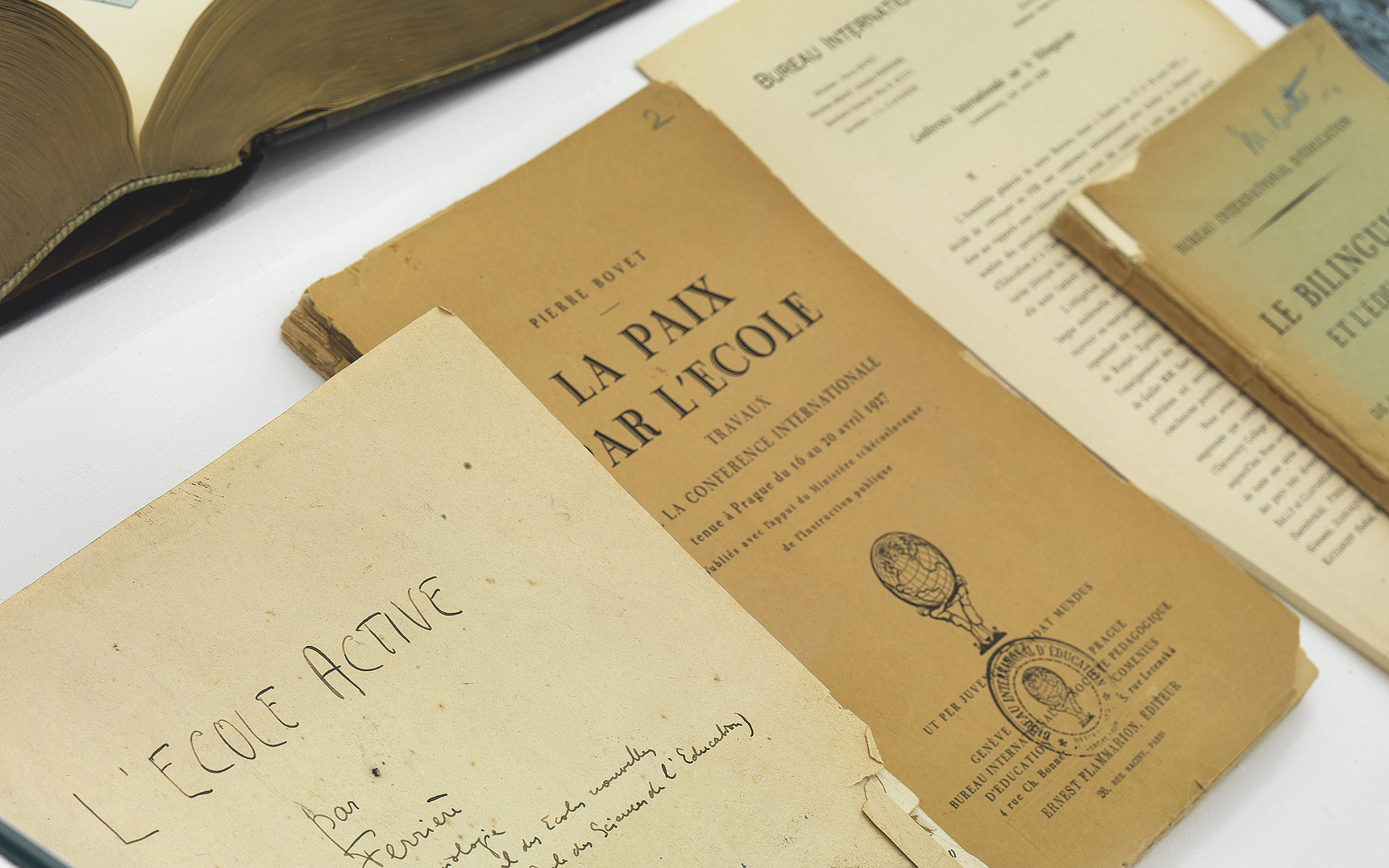
Textbooks, teacher manuals, atlases, and other learning materials on different subjects, published between 1700 and 1960.
+2k
FILES
Internal documents of historical importance, dating from the foundation of the IBE until 1969.
20k
PUBLICATIONS
International books, journals, and brochures, published between 1800 and 1960, and representing a large number of countries and languages.
140
COUNTRIES
A myriad of countries represented in the textbook collection. Some of them no longer exist today, changed their names, have been absorbed by another political regime, or gained independence.
104
LANGUAGES
Rich linguistic diversity of materials within the textbook collection, some of which considered by UNESCO to be endangered and at high risk of disappearing.
+50
SUBJECTS
A wide range of subject textbooks and teaching guides for K-12, vocational training, and adult education and literacy. They are the closest proxy to what education is like at a given point in time.

Archives
Textbooks
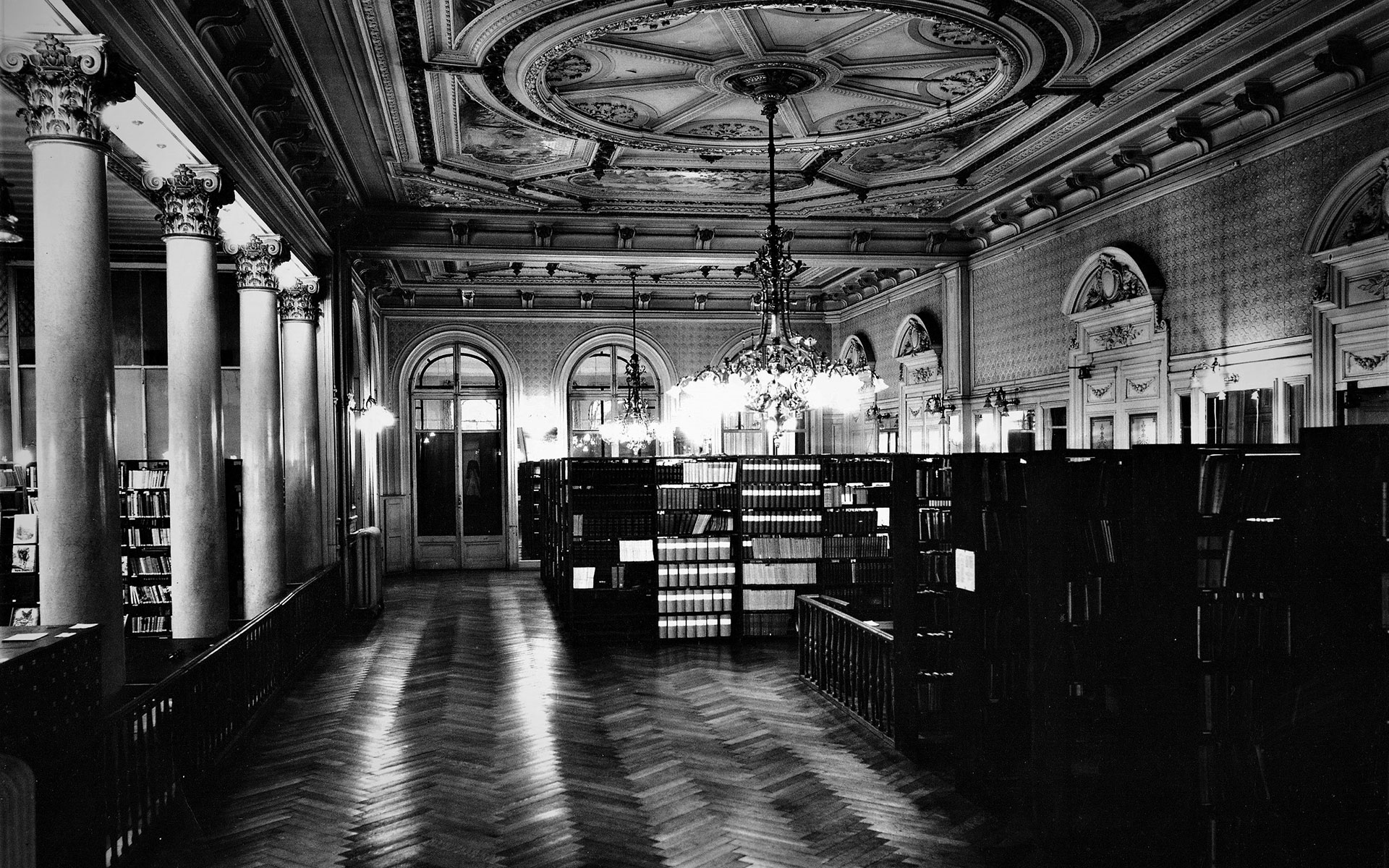
In 2020, the IBE started to catalogue its photograph collections, with the goal to digitize them and make them available to the world.

The IBE digitized collections are a treasure trove ready to be uncovered. Open to all, these unique materials will inspire you and enrich your understanding of the world. They will also take you to far away places (even if you can’t go anywhere).
FEATURED RESEARCH

René Bidias
Researcher, Institut des Relations Internationales du Cameroun, Cameroon
The theme of my research in the historical archives of the BIE focuses on the assistance provided by the IBE to African states in the development of their primary and secondary education curricula. Using the examples of Cameroon and Nigeria, the goal is, from a comparative perspective, to examine both the rationale, methods, and content of the IBE's technical assistance in shaping the curricula of sub-Saharan African states. Additionally, the research aims to evaluate the impact of these knowledge transfers on their educational systems in terms of producing human capital tailored to their development challenges. To achieve this, I have consulted numerous documents in the historical archives of the IBE, including correspondence with IBE member states. This has allowed me not only to understand the requests made by African states to the IBE regarding curricula and pedagogical documentation but also the IBE's responses to these requests. Furthermore, the analysis of reports from seminars organized by the IBE in Africa to strengthen curriculum actors has provided insights into the role played by IBE teams in these endeavors. Lastly, examining reports from International Education Conferences has helped me understand the issues raised by African delegates.
Émeline Brylinski
Postdoctoral researcher, University of Geneva, Switzerland
I explored the IBE’s archives to develop a thesis on the pioneering construction of intergovernmental cooperation during the 20th century, with the support of the Swiss National Fund (defended in 2022), and to conduct further research about international collaboration in education. In a transnational and social history approach, my research interests focus on modes of cooperation and governance in education, the production and circulation of knowledge, and the processes of developing international recommendations (among other tools) and educational policies. IBE’s archives gathers a tremendous amount of historical collections, with manuscripts, oral and published sources, that constitute the testimony of the past efforts conducted to make governments work together in educational matters, in order to implement peace in the world. The rich IBE’s archival fund makes it possible to use a variety of methodologies to reveal how political issues and power dynamics have influenced the conceptualization and institutionalization of school democratization and peace education within the global agenda. We can observe a co-construction of peace education and identify the premises of global governance in Education, which impacts national education decisions worldwide. Moreover, the archives show the multitude of actors involved and their trajectories, which we were able to compile in a series of database that will be useful for historians to connect with their own research. These archives lead us to better understand the strategies, the success, but also the tensions and failures, that the actors faced in the past, and provide guidance on how to overcome the present stakes that international cooperation in education. In other word, the study of the IBE’s archives allows us to better understand contemporary issues and informs not only researchers, but also practicians, on how to make governments collaborate with each other in the spirit of peace to ensure that everyone has access to a quality education.
José Cossa
Associate Professor, Pennsylvania State University, United States
Visiting the IBE archives has enhanced my interest in exploring its holdings because there is so much material that is pertinent to my research on power dynamics in international negotiations on educational policy ,as well as other aspects such as (a) the IBE’s role in shaping the intellectual landscape of the field of Comparative and International Education and Lifelong Learning through its key leadership such as Piaget, Rosselló and others; (b) educational systems transfer through its textbook collection, national reports and the like, (c) theory/theorizing about education in the Global South, and (d) enactments of global citizenship. As a comparativist, tracing the role of Rosselló by exploring the Rosselló Archives comprising of seven boxes covering the years of 1925-1969, is of particular importance; therefore, I will stay attentive to Rosselló’s correspondence and other primary source documents connecting Rosselló to the field of Comparative and International Education (e.g., File 5: Correspondence and miscellaneous documents, 282_Rossello-9). Moreover, as a scholar of African origin, I am interested in how relationships with Africa (e.g., governments, institutions, researchers, practitioners, etc.) are established and manifest. These two pathways might shed light into the IBE’s contribution toward shaping the intellectual landscape of the field of Comparative and International Education and on the IBE’s role in Africa’s educational landscape; thus, add more nuance to our understanding the manifestations of power dynamics in international negotiations on educational theory, policy, and practice. While the holdings that I am currently exploring, for the most part, pertain to the early decades of the IBE’s existence, my hope is that these files will offer a contextual historical understanding of how the IBE and/through its leadership interacted with a wide array of actors (e.g., governments, organizations, educational institutions, individual researchers, etc.) and how such knowledge will enhance IBE’s work on equitable global conversations about education, in general, and educational policy, in particular. It is often argued that learning from the past informs the present and the future. However, in African cosmology/ies, past-present-future are interlinked, juxtaposed, and non-mutually exclusive; therefore, what was is and will be, what is was and will be, what will be was and is.Joanna Crow
Professor of Latin American Studies, University of Bristol, United Kingdom
In the IBE’s digital and print collections, I have found a wealth of material that has allowed me to develop my research on issues of race and education in twentieth-century Latin America. In particular, I have been looking at the IBE’s collection of school textbooks from the region, and how they taught national histories during the early twentieth century, for example how they taught children about pre-Columbian societies, and Spanish conquest and colonisation. I have also been investigating sources on indigenous education programmes, and mid-twentieth century initiatives to “officialise” indigenous languages, especially Aymara and Quechua in the Andean region. This included efforts to produce a standardised alphabet for these languages and to do more indigenous language teaching in schools. The IBE has many publications on these initiatives, such as national government reports on the education campaigns underway, teaching booklets produced for specific school projects, and individual country news entries for UNESCO’s International Yearbook of Education. Finally, I discovered a fascinating collection of primary sources related to one of the founding fathers of the IBE, Adolphe Ferrière, and his travels around Latin America in the early 1930s: press coverage of his public talks and school visits; the reports he wrote up on each country for the IBE; and his correspondence with the IBE whilst he was travelling. All of this provides an excellent window into the racialised dimensions of the progressive education (sometimes referred to as New School) movement, as well as how transnational education networks functioned during this period. I will be writing this up as part of a new book project and a series of journal articles on “race-talk” in the Americas.Rita Hofstetter
Professor, University of Geneva; Co-director, ERHISE (Research Team on Social History of Education)
Based on the rich archives of the IBE, ERHISE (Research Team on Social History of Education) is carrying out large-scale collective research, subsidized by the SNSF, on how educational internationalism was operationalized from the IBE. Our research analyzes the configurations of educational internationalism at the time of its first institutionalization on a global scale. We examine the “causes” invested by its actors and map the networks that contributed to the construction of the IBE. We argue that the genesis of the institutionalization of international education unfolded during the interwar period. The IBE, filling a gap in the League of Nations’ competencies, constitutes an emblematic example of this evolution. Founded in 1925 on the initiative of the Rousseau Institute (Geneva) to promote peace through science and education, and also to federate all other international agencies involved in the process, the IBE became, in 1929, the first permanent intergovernmental organization in education. After 1946, BIE and UNESCO cooperated. Since 1969, IBE became an integral part of UNESCO. Based on the conceptual and methodological tools of the transnational turn, using diverse scales of observation in time and space, articulating different levels of analysis (local-global), our research analyze, from a Geneva institution dedicated to an international vocation, some key aspects of the configurations of educational internationalism. We try to enrich knowledge on phenomena such as the process of globalization, the actors involved in this process, the causes they invest and the procedures they resort to, considering them from the specific field of education policies and their configurations.
Joyce Goodman
Professor of History of Education, University of Winchester, United Kingdom
My research in the IBE archives concerns the contribution to comparative education by women employed at the IBE during the interwar period and their links with women educators internationally and with international women’s organizations pursuing equality and peace. I have used the IBE’s personnel files, together with the IBE correspondence files, to build up a picture of the women’s background, their activities and the international educational, peace and women’s networks in which they engaged on behalf of the IBE and in a more personal capacity. Reports in the IBE Bulletin have enabled me to trace the origins and organizational trajectories of publications in which women were involved, and to piece together the women’s involvement as the IBE negotiated its position on the terrain of education alongside other international organizations in Geneva and beyond as the latter became increasingly interested in education.
Lukas Schemper
Research Associate, Leibniz-Zentrum für Literatur- und Kulturforschung, Berlin, Germany
I investigated the IBE’s humanitarian activities during the Second World War as an example of how an international organization can quickly adapt to a changing international environment. Although not in its initial mandate, in 1939 the IBE created an intellectual aid service for prisoners of war, who wanted to pursue studies, training or receive other forms of education through the receipt of handbooks, long-distance courses or “camp universities”. My research also explores the IBE’s collaboration with other humanitarian actors such as national aid agencies, the International Committee of the Red Cross (ICRC), and the Young Men’s Christian Association (YMCA). The IBE’s archives hold five boxes containing correspondence, statistics and background information on its activities during the war and shed light on an early example of how education matters in humanitarian settings.Richard Kohler
Lecturer, Zurich University of Teacher Education, Switzerland
The IBE was an important source for my research on the biography of Jean Piaget (Jean Piaget, London: Continuum, 2008; Bloomsbury Academic, 2014), as well as for my dissertation (Piaget und die Pädagogik, Bad Heilbrunn: Klinkhardt, 2009). As the director of the IBE from 1929 to 1968, Piaget left countless reports, letters, articles, course materials and drafts. These provide an insight into the goals, strategies, and working methods that Piaget pursued with his commitment for educational improvements. They also illustrate the cooperation and networks that Piaget built up in order to influence the ministries of education in line with the “new education”. The evaluations and research work that Piaget initiated or commissioned at the IBE also served this purpose. Since not all sources were accessible at the time of my research, the archives of the IBE should still contain a lot of exciting material waiting to be discovered.Jaci Eisenberg
Head of Transformation Forum Foundations, World Economic Forum
I consulted the IBE archives while researching my doctoral thesis on the contributions of American women – “double outsiders” – to interwar international Geneva, that is, the League of Nations universe. One of my case studies focused on educational issues in and around the League, and the IBE archives proved invaluable to this end for its holdings on Fannie Fern Philips Andrews (1867-1950). Andrews was a fervent advocate for promoting peace through education. Correspondence retained in the IBE archives demonstrated that she possessed invaluable contacts with US government officials and philanthropic entities that officials at the IBE believed they could leverage to mutual benefit. The IBE archives also provided rich materials about how Andrews’ endeavors related to other international educational efforts of the era.
HIGHLIGHTS

1922
L’école active
A handwritten manuscript of Adolphe Ferrière’s L’école active (1922). Ferrière (1879–1960) was one of the founders of the progressive education movement. In 1921, he founded the New Education Fellowship, for which he wrote the charter. He was one of the founding members of the IBE in 1925, and served as its first Deputy Director, with Elisabeth Rotten.

1944
GEOGRAFÍA GENERAL Y DE ASIA Y ÁFRICA
Argentine atlas of Asia and Africa, by Josefina Passadori. Educator, politician, and writer, Passadori (1900-1987) founded the first Latin American school cooperative, of which she was also the first president. She published over 30 textbooks, some in collaboration with other authors, such as the Manual del Alumno used by many generations in Argentina.