


Building Equity through Education in the 1950s and 1960s: Insights from the IBE Historical Textbook Collection
28 May 2026 —
In the 20th century, equality emerged from the recognition of political, social, and economic rights, especially for different social groups and women. Equity is instead associated with fairness or justice in the provision, given various individual circumstances.
Equity and equality are radically different stances if taken separately, and their meanings remain hard to grasp for many. In the 20th century, equality emerged from the recognition of political, social, and economic rights, especially for different social groups and women. Equity is instead associated with fairness or justice in the provision, given various individual circumstances. Thus, equity might require, quite paradoxically, temporary inequalities. In other words, equity implies, at times, working towards equitable inequalities (Secada, 1989), reflecting the needs and strengths of the various groups, with the long-term aim of resetting the balance of equality once progress is achieved. This development stems from the 1960s, when the cultural rights movement brought equity center-stage. The difference between the two facets of equity can also be framed as Nancy Fraser (2003) describes: as redistribution of resources or equality, versus recognition of various identities and personal needs as a potentially compensatory principle.
This IBE Historical Textbook Collection is an exemplary database, supporting multiple explorations, including equity representations in school textbooks. Although a relatively small collection compared to larger digitized ones, it includes key publishers and textbooks from around the world, an astounding selection for the considered time frame. The two postwar decades are marked by robust equality concerns, although shaped by different histories and political philosophies: State Soviet-type communism, Christian democracy, French republicanism and postwar socialist Western political ideas, classical liberalism, and the civil rights political era in the American context.
The selection of 11 secondary civic and political education textbooks from five countries (England, the United States, France, Italy, and Romania) illustrates the latest postwar phases of democratic reconstruction, the economic boom, and the entering of an independence era for former colonies. What was called the “Western liberal world” enters an era of postcolonial awareness, welfare state building, and democratic consolidation, as well as the civil rights movement. Inside countries, various approaches to equity depend on the plural political stances of individual authors and publishers. At this time, we see a sizable linear increase in the recognition of personal agency, including student-centered approaches, while minority rights are endorsed mainly from the 1990s onwards (Bromley, 2016). (1) Equity as equality, equal distribution, and access to resources, and (2) equity as care and human empathy (Lynch, Kalaitkaze, & Crean, 2020) are fueled by the postwar humanist and welfarist era, which precedes (3) equity as recognition of various identities and cultural aspects (gender, social, religious, or ethnic belonging). Textbooks act as mirrors of social representations, displaying progressive (positive) symbols or conservative (“negative” symbols.
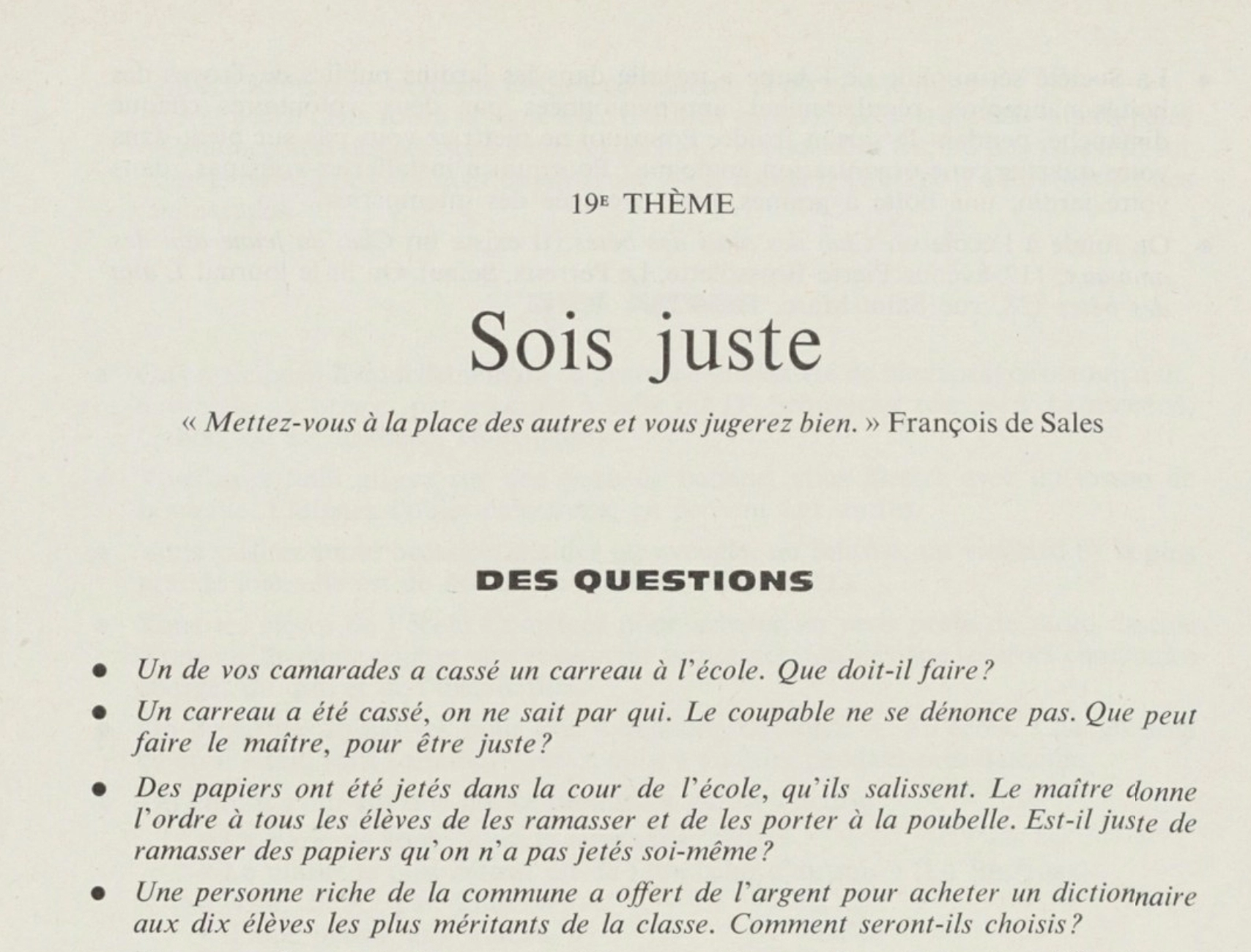
Classical citizenship approaches through moral education in lower secondary education are exemplified by Villar (1960). In this book, various moral values are explained through sophisticated moral dilemmas: to be just, tolerant, empathetic, in solidarity, and a world citizen, as well as a citizen of one’s own country. The underlying pedagogy is also one of empowerment and is student-centered, based on open questions which stimulate personal and critical reflection.
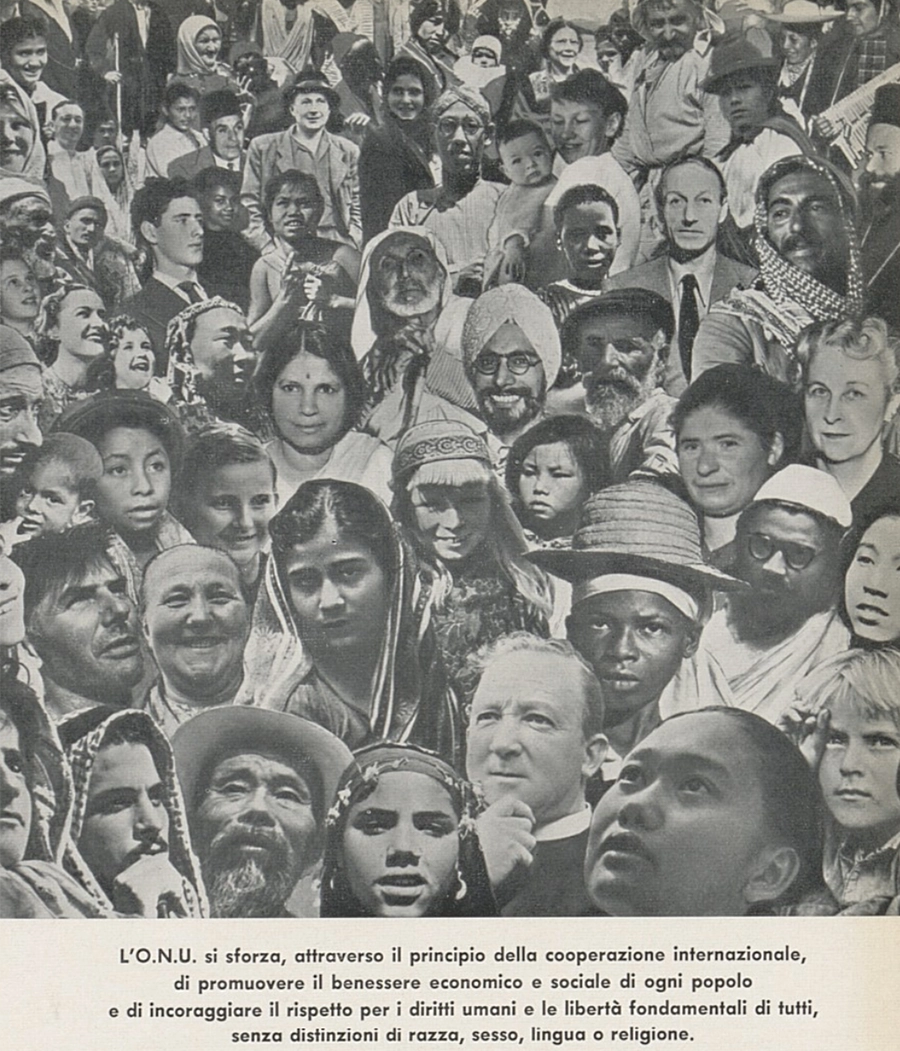
Verra (1959) comprehensively covers broad civic and moral aspects. This text is distinguished by its universal approach to the citizen and its emotional approach based on care ethics. The introduction of mental hygiene, such as the importance of rest and physical activity, is noteworthy, whilst critical comments about the media of the time—cinema and cheap, low-value comics—are acute. Another notable aspect is the care-oriented approach to democracy, through example and invitations to stand in other children’s shoes, such as Anne Frank’s or the young Tarcísio’s, or to take action in tomorrow’s world. Equally remarkable is a direct approach to UN principles, to enhance an international mindset based on trust in human rights, justice, human progress, and freedom.
Countries and territorial representations vary depending on the author, aim, and historical links. For instance, Australia can be the land where young people from England desire to settle, grow fruits, and farm sheep. English boys may be considered “lucky” to have the chance to embark on school trips to Canada or other overseas territories. These are seeds for their subsequent attraction to moving abroad. Groups of boys are euphorically depicted waving their hats, laughing and happily shouting on the docks while leaving London. These 19th-century migrations are symbolically connected to those of the Pilgrim fathers initially interested in Holland. Settling in other territories is seen as an economic opportunity and a right of those citizens who belong to larger political units such as empires. The local populations are omitted from this account, while the architecture of the settlers is in direct continuity with their home countries: e.g., “old Dutch houses in the Union of South Africa”.
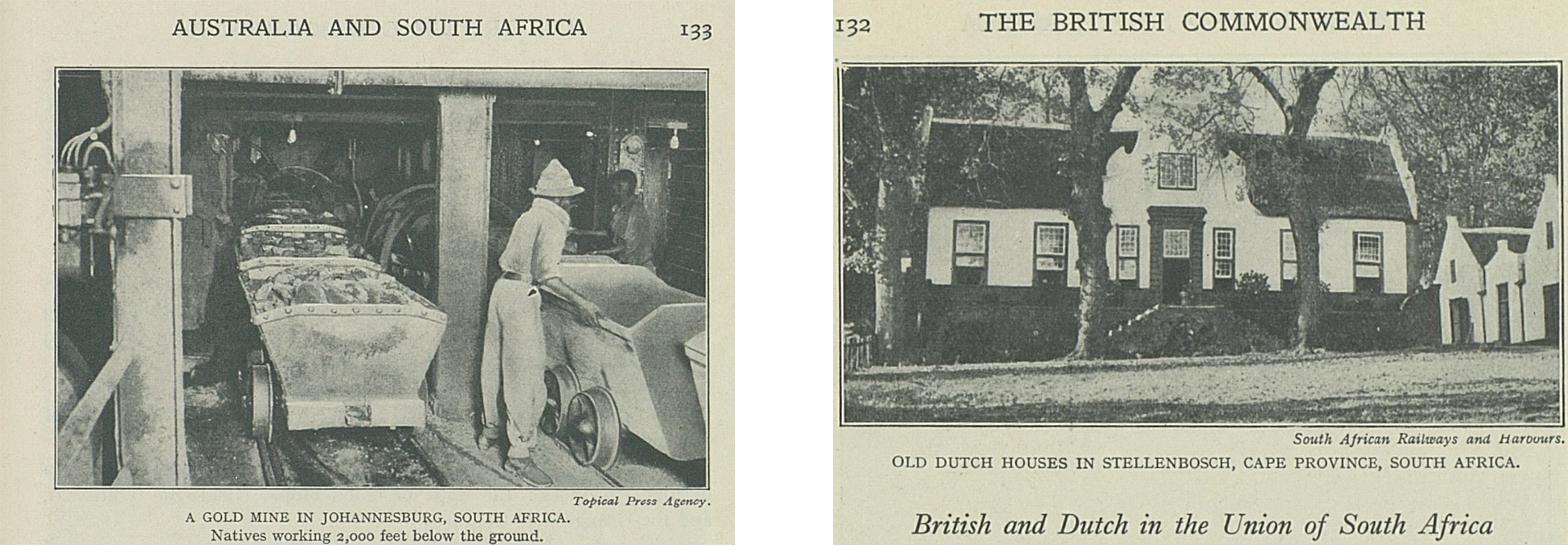
Despite some relativistic approaches to cultures, often bordering on stereotyping, the overwhelming representations of otherness in most textbooks convey an increasingly universal perspective, which has to be related to the emergence of the UN as a key international actor. Strong (1957) adopts a work-related approach to the world, which results in a more neutral and informative perspective.
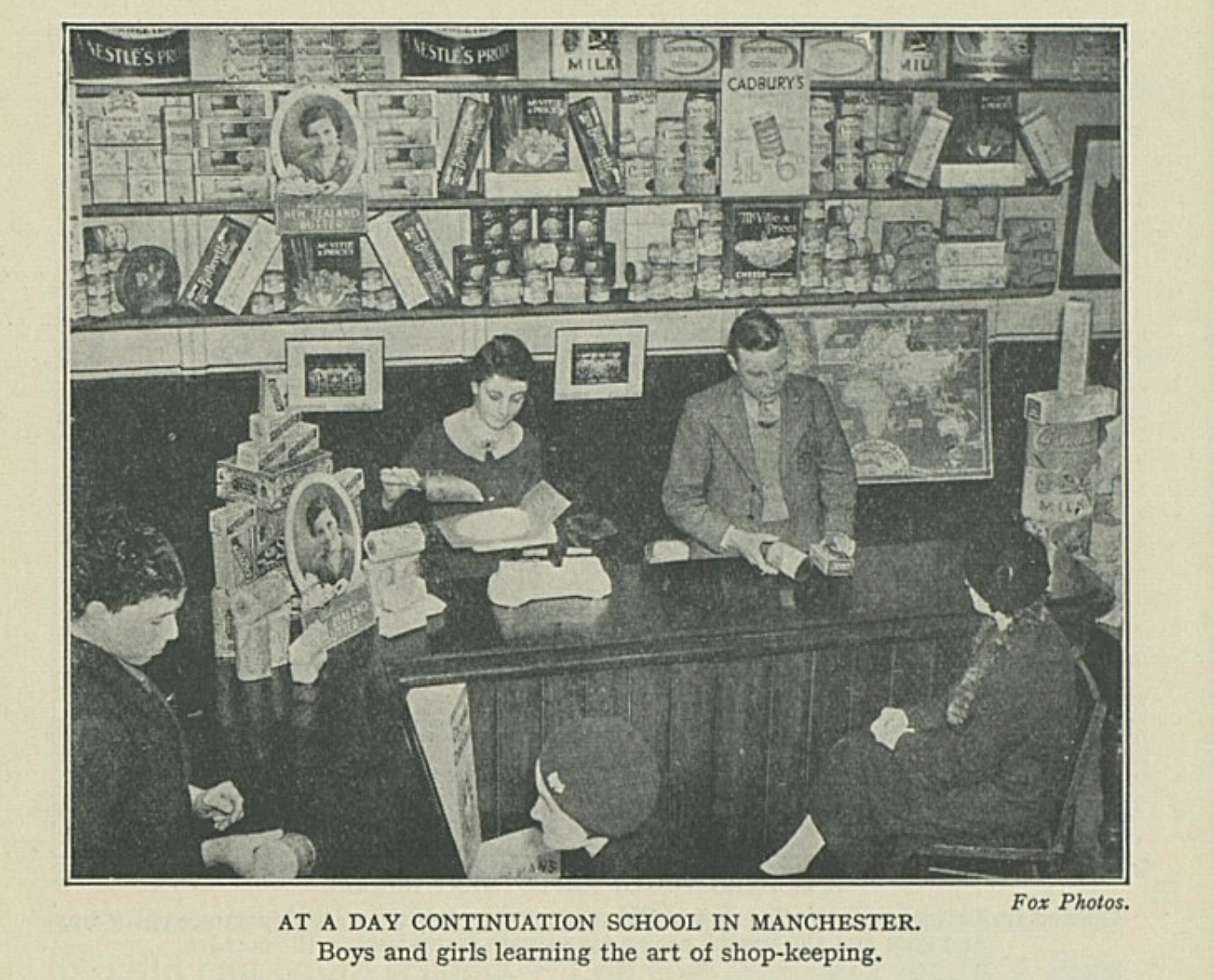
An equally universalist approach can be found in the Soviet-type socialism, where a specific focus is on equality in terms of social classes, gender, and ethnic belonging. Social rights such as the right to work, study, and relax are also exceptionally well emphasized. Politically reinforced collectivism is the base of morality and social justice, as a new form of humanism. Whilst equality takes center stage, compensatory and recognition-oriented forms of justice are omitted. Western welfare states are well represented across selected countries and textbooks. The equality of social rights at a time of welfare state construction is presented jointly with a risk of increased individualism, as in the image below. The “we” speech endorses a paternalist tone while emphasizing the duty of citizenship and not just the newly acquired rights: “Yes, all these services are at our disposal. These impose a duty of civism and solidarity. Do not take advantage of them egoistically!”
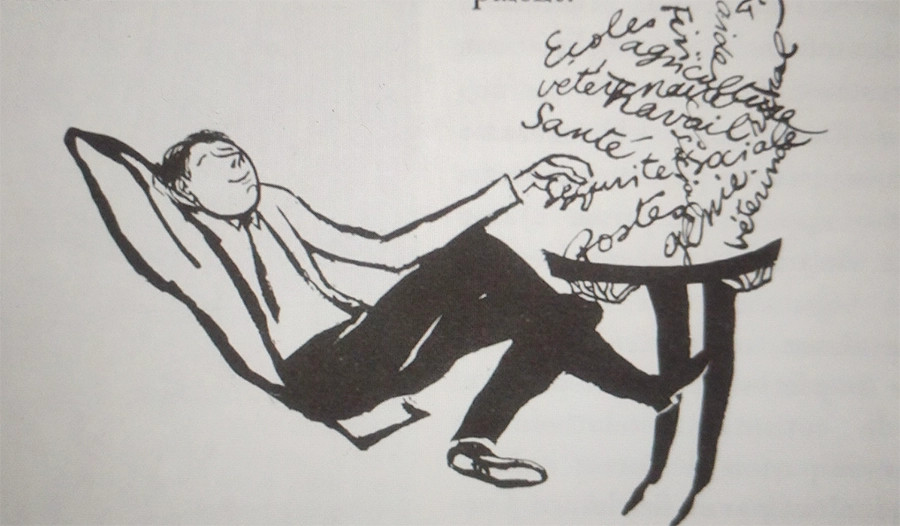
Is there an equity-oriented citizen? The presence of a territorial (geographic) dimension in textbooks was aimed at forging future citizens’ social representations of the nation (Meneses & Calderón, 2007). In some French textbooks, the national territory is a matter of “just annexation”, from an us-versus-them perspective. In some English textbooks, emerging post-imperial perspectives deal with the Commonwealth from a more egalitarian perspective: a human dignity perspective interacts with the exploration of new territories in search of economic prosperity, from which the Indigenous presence is significantly excluded. As Claeys (2018) has argued, numerous studies suggest contrasting views: the late 1950s and early 1960s witnessed a sharp decline in appetite for empire, whilst a “banal imperialism” was not phased out. The adoption of a “Commonwealth idea” was in line with previous imperial narratives and survived, albeit unevenly, into the 1970s. The consulted textbooks show a more balanced descriptive account of the broader world, in line with what Claeys has called “a collective attempt at rebranding a hierarchical empire into a ‘community of equals’” (p. 830).
Other textbooks celebrate an incipient global dimension, such as an economic European market or a universal-human-rights-based community, as inspired by the United Nations. Equality emerges in these school textbooks as a moral recognition of the other on the background of consolidated Eurocentric historiographies of the world from a “one modernity” perspective. It also emerges as an extension of the welfare state to groups previously excluded. The new welfarist imagery is still imperfect from the point of view of representing the support needed by people with different needs. Gender equality is somehow incorporated into the new welfarist social rights in textbooks in Western Europe. At the same time, in the Eastern countries it is rather a consequence of the main social endeavor; i.e., the classless society communist vision. While discriminatory portraits are rare, local cultures may be absent or represented mainly from an economically “less developed” perspective. As argued in other historical analyses, most textbooks emphasize the rapid economic and social progress and the egalitarian possibility for ordinary people, especially students, to change the world.
Becoming a citizen is a complex endeavor. It takes the praise of national values and institutions, and the awareness of economic development and civil rights grade, even if sometimes from a Manichean view. Equity as equality is well represented through economic progress and rights acquisition, such as holidays, health, and education. Equity as recognition of human diversity varies with the author: some reproduce stereotypes, most propose a more factual account while inviting the reader to notice external diversities, and fewer are passionate about mutual understanding and justice as care (see Villar, children playing). American textbooks capitalize on national history to deconstruct internal oppression and investigate “Black power”. Leif and Grimal (1965) engage with a critical account of assimilation. Girls’ and women’s rights, such as divorce, are absent from most textbooks or included as a possibility “under certain conditions”. Child labor and the value of education are strongly emphasized. An American textbook openly questions “the value of education: why go to school?” while a subtle taste of religious perspective underlies certain Italian moral accounts. Environmental worries, such as “the black tide” in France, are rare. However, emergent global citizenship is reflected in some textbooks (e.g., Verra) and is powerfully guided by the United Nations’ human rights philosophy.
References
Bromley, P. (2016). Empowered individualism in world culture: Agency and equality in Canadian textbooks, 1871–2006. European Journal of Cultural and Political Sociology, 3(2-3), 177-200. https://doi.org/10.1080/23254823.2016.1206481
Claeys, A. (2018). Britannia’s children grow up: English education at empire’s end. History of Education, 47:6, 823-839. https://doi.org/10.1080/0046760X.2018.1486465
Fraser, N. (2003). Social justice in the age of identity politics: Redistribution, recognition, and participation. In N. Fraser & A. Honneth (Eds.), Redistribution or recognition? A political-philosophical exchange (pp. 7–109). London: Verso.
Leif, J. & Grimal, H. (1965). Instruction civique: la France et l’Europe dans le monde. 1ère. Paris: Fernand Nathan.
Lynch, K., Kalaitkaze, M. & Crean, M. (2020). Care and affective relations: Social justice and sociology. Sociological Review, 69(1). http://dx.doi.org/10.1177/0038026120952744
Meneses, L. A. & Calderón, J.C. (2007). Social representations of national territory and citizenship in nineteenth‐century history and geography textbooks of the Colombian Caribbean Region. Paedagogica Historica, 43(5), 701-713. https://doi.org/10.1080/00309230701587181
Secada, W. (1989). Educational equity versus equality of education: An alternative conception. In W. Secada (Ed.), Equity and education (pp. 68–88). New York, Falmer.
Strong, C.F. (1957). Today through yesterday: Book four; the young citizen and the world of today. London: University London Press.
Verra, A. (1959). Educazione alla vita: Nozioni di educazione civica per le scuole medie e di avviamento professionale. Turin: Paravia.
Villar, G. (1960). La Morale en action: Élèves de dix à quinze ans. Paris: Fernand Nathan.

Monica Mincu